Restricted Area Retrospective: From Cyberpunk RPG to Shakes & Fidget

Note: The original interview with Jan Beuck of Master Creating, conducted by Robbie “Fleshmaker” Coker while Restricted Area was still in development, is preserved on the Internet Archive. The quotes below come from it.
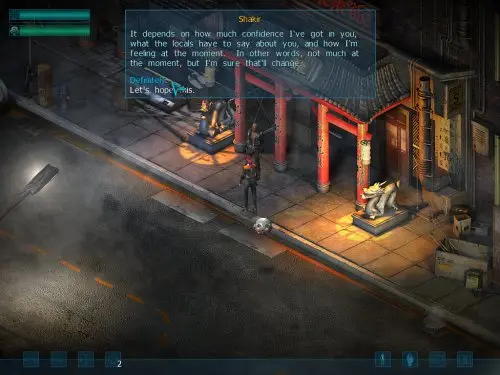
Restricted Area was a cyberpunk action RPG from a small team in Hamburg, released in Germany in October 2004. It took the Diablo formula, swapped swords for shotguns and cyber implants, and let you play the same story through four very different characters. It never became a hit, but the two founders behind it went on to build one of Germany’s most successful browser games. Here is the game, what Jan Beuck said about it before launch, and where the team ended up.
What Restricted Area Was
Master Creating, an independent studio in Hamburg, announced on September 16, 2004 that Restricted Area had gone gold, with a German release on October 1, 2004. Whiptail Interactive later brought it to North America. It was a PC game built on the studio’s own IRIS engine, which mixed pre-rendered backgrounds with real-time 3D.
The idea went back to the summer of 1999. Beuck said the first concept, which stayed the core of the game, was to mix “Shadowrun” with “Mission Impossible”. He hoped it would reach fans of Cyberpunk and Shadowrun, films like The Matrix, Blade Runner and Terminator, and players of the Diablo series.
The World of 2083
The game is set in 2083. Cities have grown until they merged into one planet-wide mega city, broken only by the oceans and the Wastelands, contaminated deserts where only mutants live. Corporations are more powerful than governments, and they hide their secrets in underground fortresses far out in the Wastelands to keep them from freelance thieves. Smog keeps the light dim, but colourful projections and lanterns light up the streets.
Beuck explained the choice simply: there were new fantasy RPGs every month, while dark future RPGs were rare. He liked the challenge of imagining the world 80 years ahead, “not so close that it’s really over viewable what will be then, but close enough that some of us will see in which way we were right”.
Four Characters, One Story
You pick one of four characters, and each one plays very differently:
| Character | Role | What only they can do |
|---|---|---|
| John Johnson | Heavy weapons specialist | Use heavy weapons like flamethrowers and plasma guns |
| Kenji Takahashi | Martial artist | Fight up close with katanas and cyber claws, and kick while shooting |
| Victoria | PSI user | Telepathy, psychokinesis and clairvoyance |
| Jessica | Tech expert | Hack into Cyberspace, with a flying robot drone as her guard |
All four play their own part in the same big story, and you meet the others along the way. Beuck compared it to “being the actor of a movie character”. His example: if one character is captured, playing that character means sitting in a cell until someone rescues you. Playing the rescuer means breaking in and keeping the prisoner alive on the way out. Playing either of the others, you are doing something else entirely.
What Jan Beuck Said About the Game
The interview took place when Beuck estimated the game was about 70% done. The team had just finished a publisher demo, and only Johnson was fully playable. He also joked about release dates: “how often have you seen a game come late, a month, three months, half of a year, a year or even two?”
Skills and Attributes
Each character has six attributes: Strength, Quickness, Constitution, Intelligence, Reaction and Willpower. Each can learn up to 15 unique skills plus 15 general skills open to everyone, for 30 in total, each from level 0 to 10. Beuck corrected websites that had reported 30 unique skills per character, and said the split was meant to avoid useless skills and skills that were nearly the same.
Cyberware Has a Cost
Implants replace most equipment. “Why wear an armor jacket if you can make you skin hard as stone? Why wear night goggles if you can have eyes with infrared vision?” Beuck asked. Johnson has no reason not to replace himself piece by piece, but Victoria loses her aura, and with it her PSI powers, with every body part she replaces. Each character also has a limit, and overloading yourself with implants “will end up in bad results”.
Realistic Combat and Smart Enemies
Combat is real-time, and your chance to hit depends on weapon accuracy, your aim, the enemy’s reflexes, distance, height, lighting, weather and how fast the target moves. Beuck said gameplay still came before realism.
The AI judged your “visible strength”. Some enemies were dumb, others clever or working in groups, and some would run if you drew a bigger gun. A small group attacking someone with a pistol might flee when that player suddenly pulls out a plasma gun. Beuck called it a first for a computer game.
Sound and the Team
The soundtrack came from three composers, in an industrial style that moves through dark wave, electro and drum and bass with epic choirs. Beuck said the sound effects were made by an Academy Award-winning Hollywood company.
The team was based in Hamburg, with members from Sweden, Russia and the UK, and everyone was under 30. Beuck listed his hobbies as fitness, cinema, pen-and-paper RPGs and sword fighting. His top games included Zelda 3, Secret of Mana, Chrono Trigger and Diablo 2.
Release and Reception
Restricted Area came out in Germany on October 1, 2004. Reviews in English were mixed. GameSpot liked how different the four characters felt, the visceral combat, the steady power gains from levels and gear, and the soundtrack. It criticised the dated 2D look, the repetitive missions, the basic two-player co-op, crashes and long loading times, and the awkward English translation.
The game has never been re-released on a modern store. Fans have voted for it on the GOG Dreamlist, but there is no announcement, so the original discs are the only way to play it.
Where Are They Now?
Master Creating
Master Creating stayed with action RPGs. Its next game, Legend: Hand of God, was a fantasy action RPG released in Europe and brought to North America by THQ’s ValuSoft label on August 1, 2008.
Jan Beuck and Martin Jässing: Playa Games
In 2009 Jan Beuck and Martin Jässing founded Playa Games in Hamburg and launched the browser RPG Shakes & Fidget, a comic-style game that pokes fun at RPG clichés. It became the studio’s biggest success. By the end of 2018, Playa Games had five released games and about 70 million registered players.
On December 11, 2018, the Swedish group Stillfront announced it was buying Playa Games for up to €45 million: €20 million up front in cash and shares, plus up to €25 million more tied to results in 2019 and 2020. Playa had made about €7.7 million in net revenue in the first nine months of 2018, with an EBIT margin of about 55%.
In January 2021, Beuck (CEO), Jässing (CTO) and Hannes Beuck (Co-CEO) left the company. COO Thorsten Rohmann, who had been there for nine years, became CEO. Shakes & Fidget is still running today on browser and mobile.
Restricted Area’s Legacy
Restricted Area is a small footnote next to Diablo II, but an interesting one. Cyberpunk action RPGs were rare in 2004, and its four-character structure, implants with real drawbacks and enemies that flee from bigger guns were ideas worth trying. Its rough edges were the kind you would expect from a small team’s first full commercial game.
The bigger story is what came next. The same two founders went from a cyberpunk Diablo-like to a comedy browser RPG with tens of millions of players and a €45 million sale. Few studios of that era can say the same.
Did you play Restricted Area back in 2004, or did you work on it? Share your memories in the comments, or through our contact page.
Frequently Asked Questions
When was Restricted Area released?
Restricted Area was released in Germany on October 1, 2004, for PC. Whiptail Interactive published it in North America later.
Who made Restricted Area?
Master Creating, an independent studio in Hamburg, Germany. Jan Beuck was its Creative Director, and the team built its own IRIS engine for the game.
Can you play Restricted Area today?
Only with an original copy. It has not been re-released on Steam or GOG, although fans have asked for it on the GOG Dreamlist.
How many playable characters does Restricted Area have?
Four: Johnson the heavy weapons expert, Kenji the martial artist, Victoria the PSI user and Jessica the hacker. Each sees the same story from a different side.
What did the Restricted Area developers do next?
Master Creating made Legend: Hand of God. Founders Jan Beuck and Martin Jässing then started Playa Games in 2009, made Shakes and Fidget, and sold the studio to Stillfront in 2018.
Related Guides
- Sudeki: Where Are They Now?: Climax’s Xbox RPG and where its team went.
- Eon of Tears: Where Are They Now?: the biblical RPG that was never released.
- Dragon Empires: Where Are They Now?: Codemasters’ cancelled clan warfare MMO.
- Todd Howard in the Morrowind Era: the original interview from Bethesda’s early days.
- Complete Manarion Guide: a modern browser RPG, explained from the start.
- Battling vs Gathering in Manarion: choose your path.
Last updated: October 2026.